The World on Stage: A Semester of Conversations on Eurasia, the Middle East, and the Indo-Pacific
May 05, 2026
From February through April 2026, the Clements Center hosted four major events on national security and global affairs, bringing scholars, policymakers, military leaders, and intelligence professionals to the Forty Acres.
Together, the spring lineup covered Eurasia, Iran, India, and China through a common set of questions: how states build and lose legitimacy, how force and law interact under pressure, and how the United States positions itself in a world of overlapping strategic competitions.
Eurasia Policy Forum: Contemporary Political Myth and Reality in Eurasia
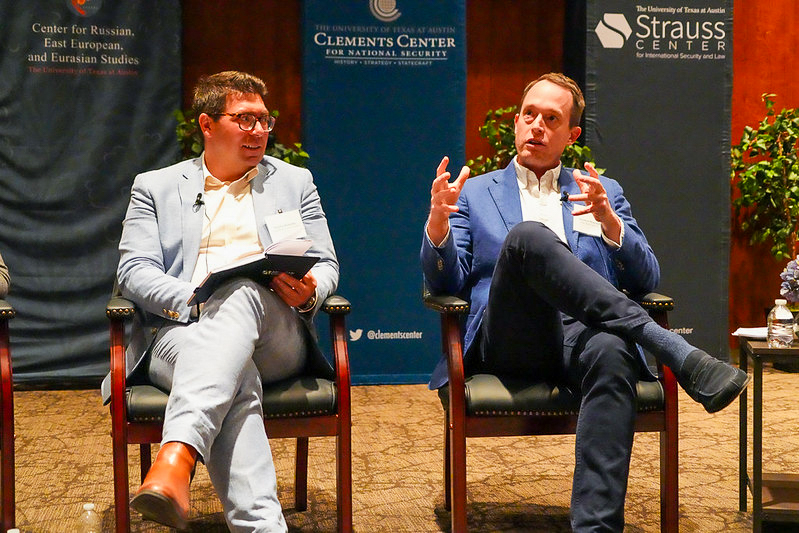
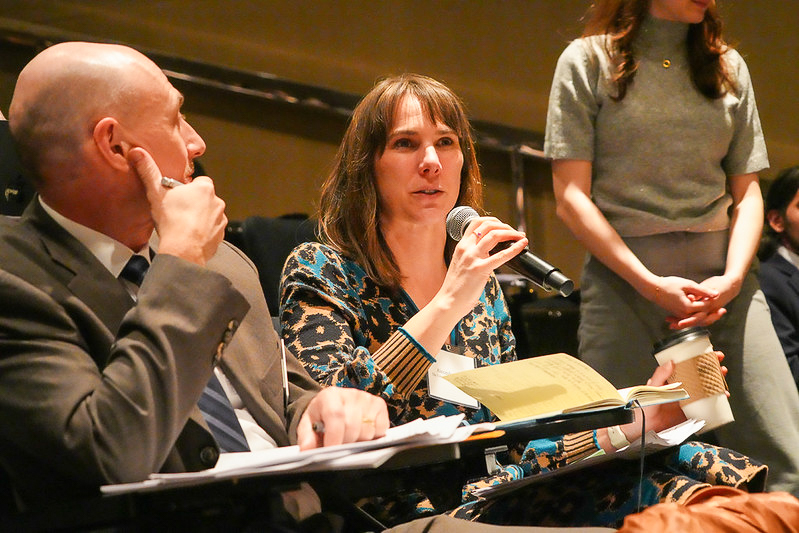

The semester opened with the Eurasia Policy Forum: Contemporary Political Myth and Reality in Eurasia, an all-day conference organized with UT Austin’s Center for Russian, East European, and Eurasian Studies, the Center for Law and Democracy, the Strauss Center for International Security and Law, and more than a dozen co-sponsoring units. Michael Kimmage, Director of the Kennan Institute, delivered the keynote. Panels examined state-building and democratic backsliding, the political mythology of Holy Rus’ in Russia and the United States, identity and power during wartime, and the conditions under which narratives sustain or erode democratic values. Scholars from Princeton, Boston College, Harvard, and European institutions joined UT-Austin faculty. Photos are available in this Flickr album.
Striking the Ayatollah: War Powers, Political Order, and Consequences
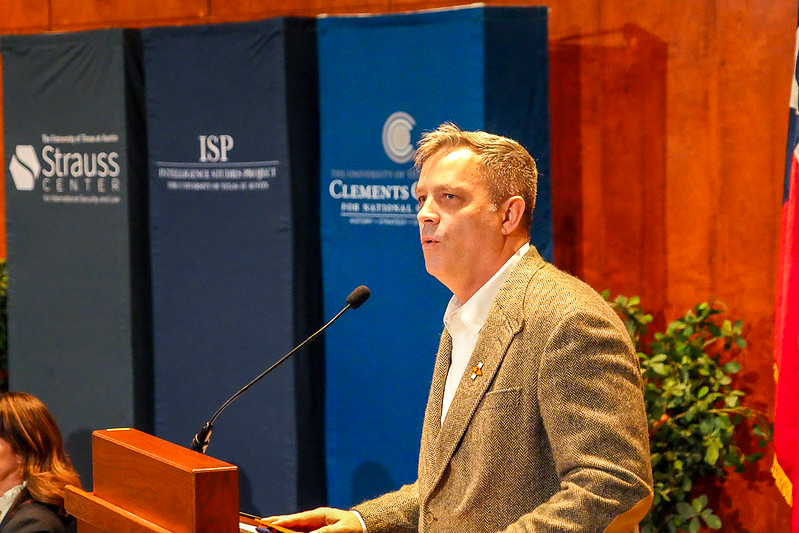
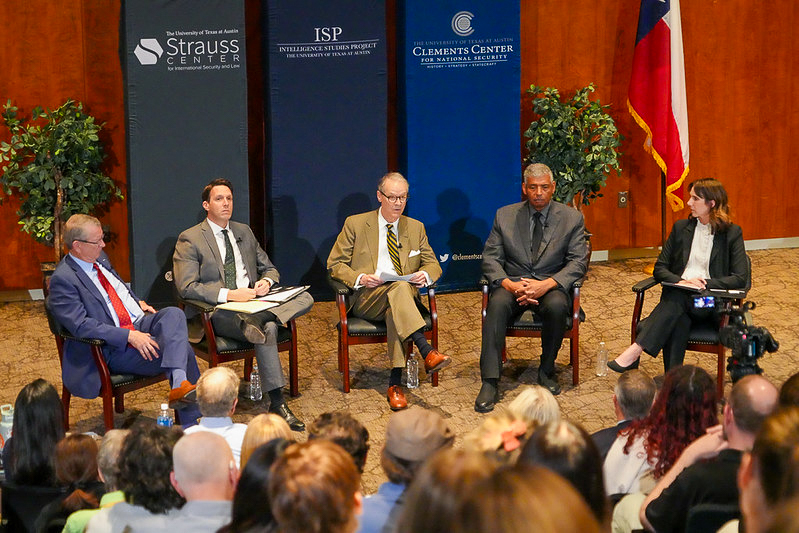

In March, days after U.S. strikes against Iranian targets reignited debate over presidential war powers, the Clements Center joined the Strauss Center and the Clements-Strauss Intelligence Studies Project for a Rapid Response event, Striking the Ayatollah: War Powers, Political Order, and Consequences. General (Ret.) Vince Brooks, Strauss Center Director Adam Klein, former CIA officer Steve Slick, and senior military attorney Paul Pope joined a panel moderated by Intelligence Studies Project Director Alexandra Sukalo and introduced by Clements Center Deputy Executive Director Paul Edgar. The conversation covered the constitutional tension between presidential authority and congressional war powers, the limits of intelligence in high-stakes decisions, and why leadership strikes rarely resolve the political problems that prompted them. More photos are available in this Flickr album. The full event recording is also online.
India at 100: Decades of Decisions
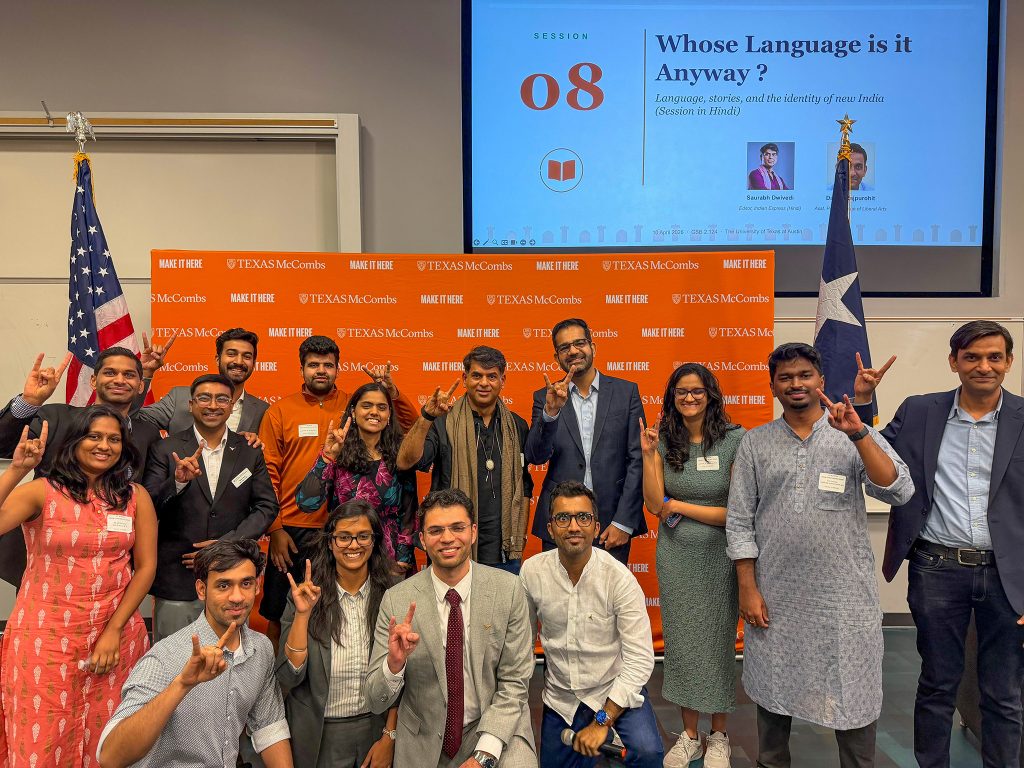


On April 10, the Clements Center helped support India at 100: Decades of Decisions, a student-led conference with the South Asia Institute, the McCombs School of Business, and the Strauss Center. Economist Arvind Subramanian and political scientist Devesh Kapur examined India’s macroeconomic trajectory; Tanvi Madan of the Brookings Institution addressed the emerging Indo-U.S.-Texas economic corridor; additional sessions covered India’s position in the global AI ecosystem, human capital development at scale, and the evolving role of language and identity. Additional photos are available in this Google Photos album.
The U.S.-China Economic and Security Review Commission at 25

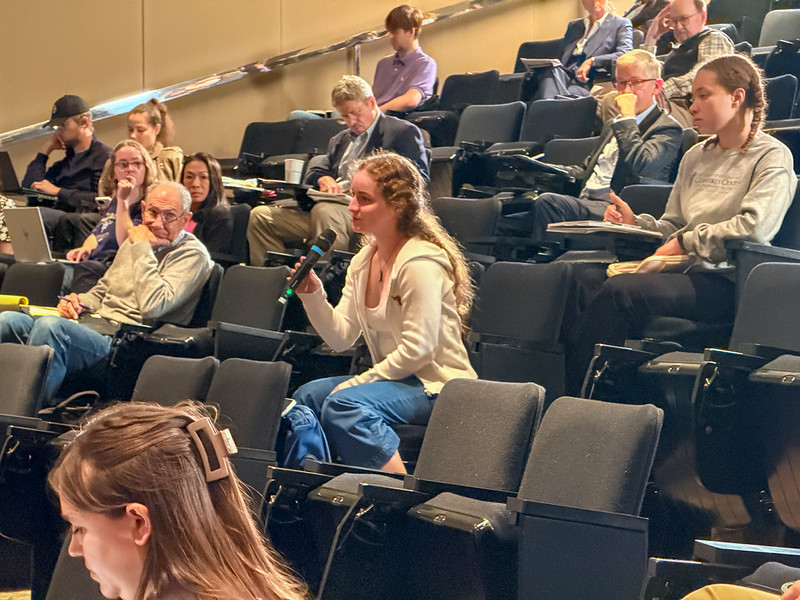

The semester closed on April 21 with The U.S.-China Economic and Security Review Commission at 25, featuring the Hon. Randall Schriver, former Assistant Secretary of Defense for Indo-Pacific Security Affairs and now Chairman of the Board of the Institute for Indo-Pacific Security, and Mike Kuiken, Distinguished Visiting Fellow at the Hoover Institution and Commissioner on the U.S.-China Economic and Security Review Commission. They examined how the terms of strategic competition have shifted since the Commission’s founding and where the relationship stands today. More photos are available in this Flickr album. The full event recording is also online.