

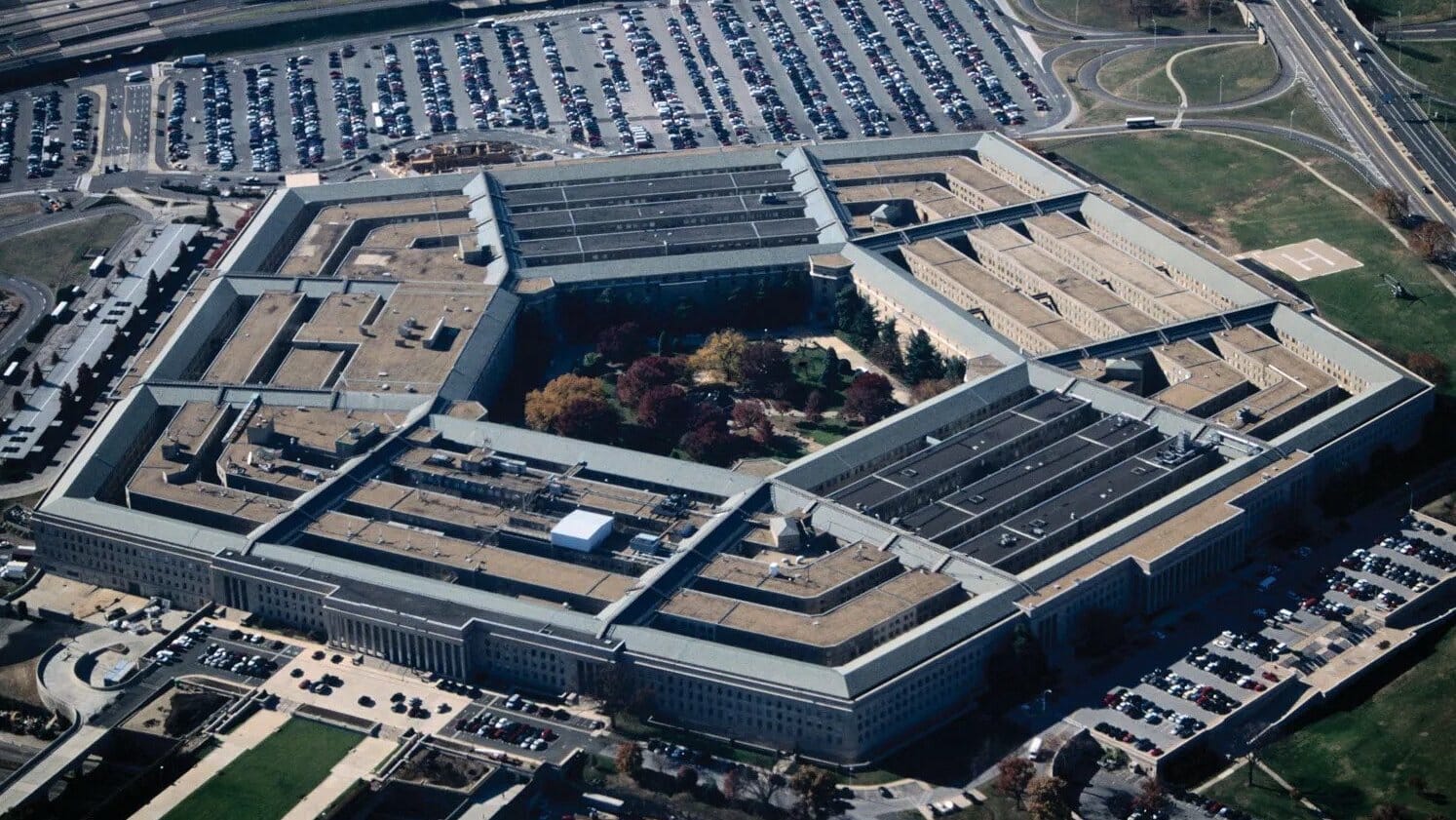


9/11: What Happened, and What it Means Today
Speaker:
Bobby Chesney, Sheena Chestnut Greitens, Will Inboden, Adam Klein, MG Jeannie Leavitt, VADM Joe Maguire, ADM Bill McRaven, Steve Slick
Thursday, September 11, 2025 | 12:15 - 1:45 pm | William C. Powers Student Activity Center (WCP) Ballroom

On Thursday, September 11, the Clements Center for National Security, the Strauss Center for International Security and Law, and the Intelligence Studies Project hosted “9/11: What Happened, and What it Means Today” with Bobby Chesney, Dean of the University of Texas School of Law, Sheena Chestnut Greitens, Founder and Director of the Asia Policy Project, Will Inboden, Executive Vice President and Provost of the University of Texas, MG Jeannie Leavitt, Distinguished National Security Fellow of the Clements Center, VADM Joe Maguire, Executive Director of the Clements Center, ADM Bill McRaven, Former UT Chancellor and Commander, U.S. Special Operations Command, Professor of National Security, The LBJ School of Public Affairs, and Steve Slick, Director of the Intelligence Studies Project. Adam Klein, Director of the Strauss Center for International Security and Law, will moderate. As we mark the anniversary of September 11, 2001, we will gather to reflect on the attacks, the immediate response, and the long-term consequences that continue to shape American policy and society. This panel brings together experts with firsthand experience and deep insight to discuss how that day transformed our national security, foreign policy, and the relationship between the American people and their government. The event was from 12:15 – 1:45 pm in the William C. Powers Student Activity Center (WCP) Ballroom.
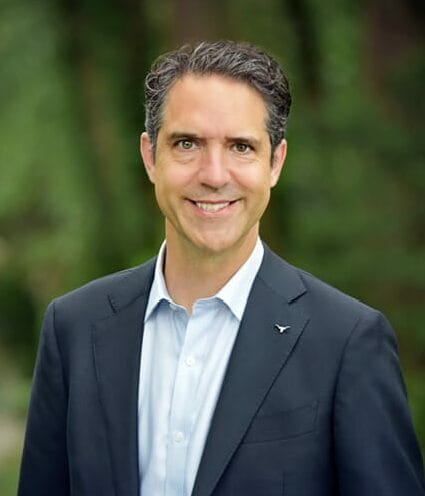
Robert (Bobby) Chesney is the Dean of the University of Texas School of Law, where he also holds the James A. Baker III Chair in the Rule of Law and World Affairs. He is known internationally for his scholarship relating both to cybersecurity and national security. He founded and continues to guide the Integrated Cybersecurity Studies program at UT, and is the author of a popular eCasebook on the legal and policy aspects of that topic. His scholarship on issues such as military detention, the use of lethal force, freedom of speech, covert action, and military cyber activities has been published in an array of leading law reviews.
He is a co-founder of Lawfare, the nation’s leading online source for analysis of national security legal issues, and he co-hosts the popular show The National Security Law Podcast with Steve Vladeck. He has been a member of an array of federal government advisory bodies, including the Cybersecurity Advisory Committee, the Advanced Technology Board, the Detention Policy Task Force, and the Intelligence Science Board. He has testified before Congress on many occasions.
Dean Chesney attended Harvard Law School and Texas Christian University, graduating both magna cum laude. He clerked on the United States District Court for the Southern District of New York and the United States Court of Appeals for the Second Circuit, and practiced law in the litigation department of David Polk & Wardwell. Before joining UT in 2008, he was a member of the faculty of Wake Forest University School of Law, where he won multiple teaching awards. He is from San Antonio. For tacos in Austin, he recommends Veracruz All-Natural, of course.
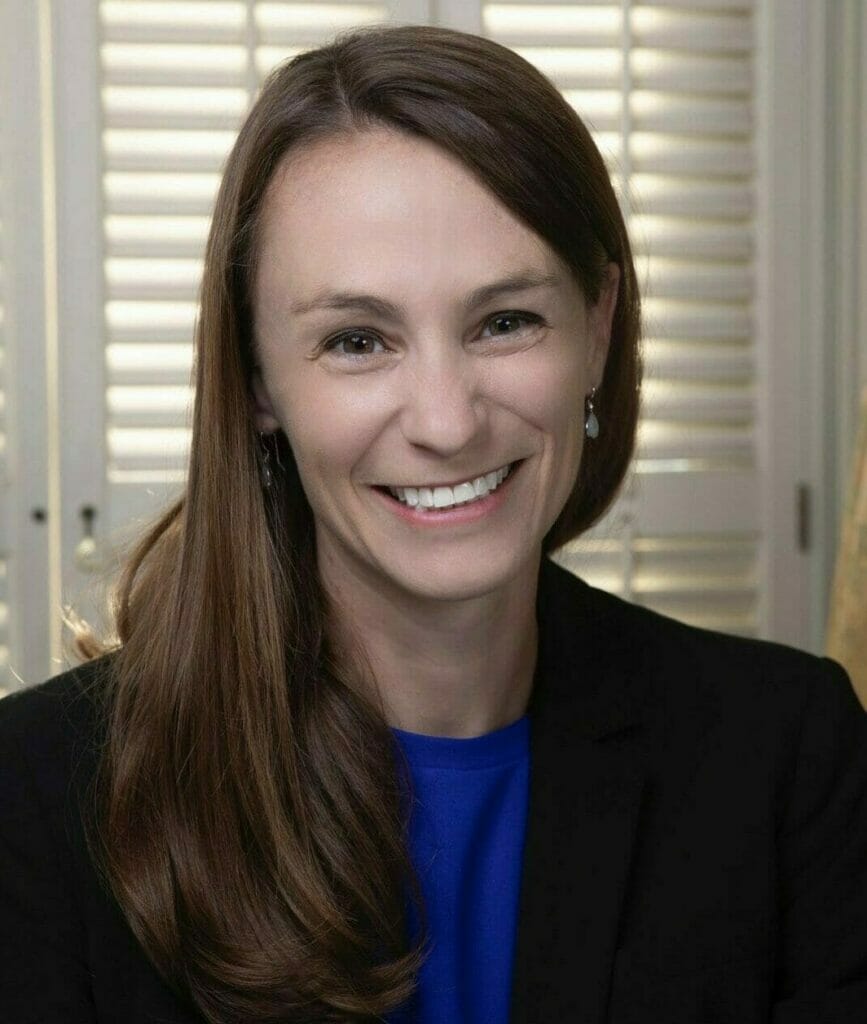
Sheena Chestnut Greitens is an Associate Professor at the Lyndon B. Johnson School of Public Affairs at the University of Texas-Austin, where she directs UT’s Asia Policy Program. Her work focuses on East Asia, authoritarian politics, and national security. She is on leave in 2023-24 to serve as Visiting Research Professor of Indo-Pacific Security at the U.S. Army War College, and is also a Jeane Kirkpatrick fellow at the American Enterprise Institute. From 2015 to 2020, Chestnut Greitens was an assistant professor of political science at the University of Missouri, and co-director of the University’s Institute for Korean Studies. Her work has appeared in academic journals and edited volumes in English, Chinese, and Korean, and in major media outlets, and she regularly testifies to Congress on challenges to security and democracy in Asia. Her first book, Dictators and their Secret Police: Coercive Institutions and State Violence received the 2017 Best Book Award from both the International Studies Association and the Comparative Democratization section of the American Political Science Association. She is currently working on her third book project, on internal security and Chinese grand strategy. She holds a doctorate from Harvard University; an M.Phil from Oxford University, where she studied as a Marshall Scholar; and a bachelor’s from Stanford University.

William Inboden began serving as executive vice president and provost on August 1, 2025. He also holds the William Powers Jr. Chair and a joint faculty appointment with the Department of History and the School of Civic Leadership. As the University’s chief academic officer, he leads UT Austin’s academic mission and ensures the excellence and continued innovation of research and teaching endeavors across campus.
A distinguished teacher and scholar who has served in leadership positions in both higher education and government, Dr. Inboden has a long history at UT Austin, previously holding positions such as the executive director of the Clements Center for National Security, co-director of The University of Texas System National Security Network, and a faculty member in the LBJ School of Public Affairs. Before academia, he held several foreign policy positions with the US Government, including service on the National Security Council at the White House.
He received his A.B. in History with Honors from Stanford University and his M.A., M.Phil, and Ph.D. in History from Yale University. Dr. Inboden has authored numerous books, articles and chapters on diplomatic history, religion and foreign policy, the American presidency, and national security. His research and teaching have been recognized with several honors, including selection as a “Texas 10” by the Texas Exes.

Adam Klein is Director of the Strauss Center for International Security and Law at the University of Texas at Austin. He also holds a faculty appointment at the University of Texas School of Law, where he teaches courses on national-security law, counterterrorism, intelligence, and government surveillance, and chairs the university’s Advisory Committee on Classified Research.
Before joining the Strauss Center, Adam served as Chairman of the United States Privacy and Civil Liberties Oversight Board, the independent, bipartisan federal agency responsible for overseeing counterterrorism programs at the NSA, FBI, CIA, Department of Homeland Security, and other federal agencies. As the Board’s Senate-confirmed Chairman, he oversaw its oversight and advice engagements with other federal agencies, while also serving as the Board’s chief executive officer. He is also lead of the Technology, Security, and Global Affairs program at the Strauss Center.
Before entering government, Adam was the Robert M. Gates Senior Fellow at the Center for a New American Security, a bipartisan national-security research institution in Washington, DC. There, his research focused on government surveillance, intelligence powers, and national security law.
Previously, Adam practiced law at Wilmer Cutler Pickering Hale & Dorr, LLP and served as a law clerk to Justice Antonin Scalia of the U.S. Supreme Court and Judge Brett Kavanaugh of the U.S. Court of Appeals for the D.C. Circuit. He has also worked on national-security policy at the RAND Corporation, the 9/11 Public Discourse Project (the non-profit successor to the 9/11 Commission), and in the U.S. Congress. He received his BA from Northwestern University and his JD from Columbia Law School.
Adam is a former Council on Foreign Relations International Affairs Fellow, French-American Foundation Young Leader, and Robert Bosch Foundation Fellow in Berlin. He speaks German and French.

Major General (Retired) Jeannie Leavitt served in the United States Air Force for 31 years after earning her commission as a Distinguished Graduate of the Air Force Reserve Officer Training Corps program at the University of Texas at Austin. She graduated pilot training at Laughlin Air Force Base in January of 1993, and then became the first female fighter pilot for the Air Force when the Department of Defense changed their combat exclusion policy for women in April of 1993. General Leavitt is a graduate and former instructor of the United States Air Force Weapons School in the F-15E Strike Eagle. She is a decorated command pilot with more than 3,000 hours, including more than 300 combat hours.
In 2012, General Leavitt became the first woman to command a combat wing when she took command of the 4th Fighter Wing at Seymour Johnson Air Force Base. She also commanded the 57th Wing at Nellis Air Force Base and Air Force Recruiting Service at Joint Base San Antonio-Randolph. Additionally, she served as the Department of the Air Force Chief of Safety, where she oversaw mishap prevention and risk management programs for the Air Force and Space Force.
Her joint assignments include Special Technical Operations Chief at United States Forces Korea, Chief of Staff of the Air Force Fellow at the Central Intelligence Agency in Washington D.C., and Principal Military Assistant to the Secretary of Defense for Secretary Chuck Hagel and Secretary Ash Carter.
She earned a Bachelor of Science in Aerospace Engineering from the University of Texas at Austin. She also holds a Master of Science in Aeronautics and Astronautics from Stanford University, an MBA from Auburn University, a Master of Military Art and Science from Air University, and a Master of National Security Affairs from the National War College, National Defense University

Joseph Maguire was appointed Executive Director of the Clements Center for National Security in February 2024. He also holds the Sid Richardson Visiting Chair at the LBJ School of Public Affairs where, as a Professor of Practice, he teaches courses on national security, intelligence, leadership, and ethics to master’s students studying public affairs and global policy.
Admiral Joe Maguire served in the U.S.Navy for 36 years until his retirement in 2010 as a Vice Admiral. Maguire spent his final nine years of service in the flag officer ranks leading large, complex military and civilian organizations in challenging situations. In his post military career, Maguire was a Vice President with Booz, Allen, Hamilton; President and CEO of the Special Operations Warrior Foundation; Director of the National Counterterrorism Center; and Acting Director of National Intelligence. He is currently Vice Chairman on the Board of Southeastern Guide Dogs, a Director on the Board of the National Navy SEAL Museum and an Advisor to the Director, National Counterterrorism Center. He previously served as a Director on the Board of W.S. Darley & Co. and SAP National Security Services, Inc. Board of Advisors. He owns his own consulting firm and is also a consultant principal with WestExec Advisors, a prominent national security consulting firm.
Admiral Maguire earned a Bachelor of Science degree from Manhattan College and a Master’s in National Security from the Naval Post Graduate School. He was also a National Security Fellow at Harvard University.

William McRaven is the former University of Texas System chancellor and retired U.S. Navy four-star admiral. He is currently a Professor of National Security at the LBJ School of Public Affairs. As chancellor, he oversaw 14 institutions that educate 221,000 students and employ 20,000 faculty and more than 80,000 health care professionals, researchers and staff. As the commander of U.S. Special Operations Command, McRaven led a force of 69,000 men and women and was responsible for conducting counter-terrorism operations worldwide. He is a recognized national authority on U.S. foreign policy and has advised presidents George W. Bush and Barack Obama and other U.S. leaders on defense issues. McRaven oversaw the 2011 Navy SEAL raid in Pakistan that killed al-Qaeda leader Osama bin Laden. His book, Spec Ops: Case Studies in Special Operations Warfare: Theory and Practice, published in several languages, is considered a fundamental text on special operations strategy. He has received the Republic of France’s Legion d’Honneur, the Federal Law Enforcement Officers Association’s National Award and the National Intelligence Award. In 2016, McRaven was named the recipient of the Ambassador Richard M. Helms Award by the Central Intelligence Agency Officers Memorial Foundation.
Stephen B. Slick is Director of the Intelligence Studies Project, a joint partnership between the William P. Clements Center for National Security and the Robert S. Strauss Center for International Security and Law. He retired in 2014 after 28 years as a member of CIA’s clandestine service.
Between 2005 and 2009, Steve served as a special assistant to the president and the Senior Director for Intelligence Programs and Reform on the staff of the National Security Council. He was previously the Director for Intelligence Programs at the NSC. While serving at the White House, Steve participated in efforts to restructure and reform the intelligence community informed by recommendations of the commissions charged with investigating the 9/11 attacks and the flawed pre-war analysis of Iraq’s unconventional weapons programs. These efforts included a series of executive orders on U.S. intelligence issued in August 2004, key provisions in the Intelligence Reform and Terrorism Prevention Act of 2004, the administration’s responses to recommendations by the “WMD Commission”, as well as significant amendments to Executive Order 12333 that were approved by President George W. Bush in 2008.
Steve completed five overseas tours as a CIA operations officer and manager, including service from 2009 to 2013 as the chief of station and director of national intelligence’s representative in a Middle Eastern capital. His assignments at CIA Headquarters included service as an executive assistant to the deputy director of central intelligence and leading CIA’s operations in the Balkans. Steve received CIA’s Medal of Merit, Commendation Medal and other awards.
Prior to joining CIA, Steve was a litigation associate at the law firm of Rawle and Henderson in Philadelphia. Steve received a B.A. from the Pennsylvania State University, J.D. from the UCLA School of Law, and Master in Public Policy from Princeton University’s Woodrow Wilson School of Public and International Affairs.


View full photo gallery from the event here.