

From NATO Enlargement to the Vietnam Analogy: Inside the 2026 Summer Seminar in History and Statecraft
Jul 22, 2026
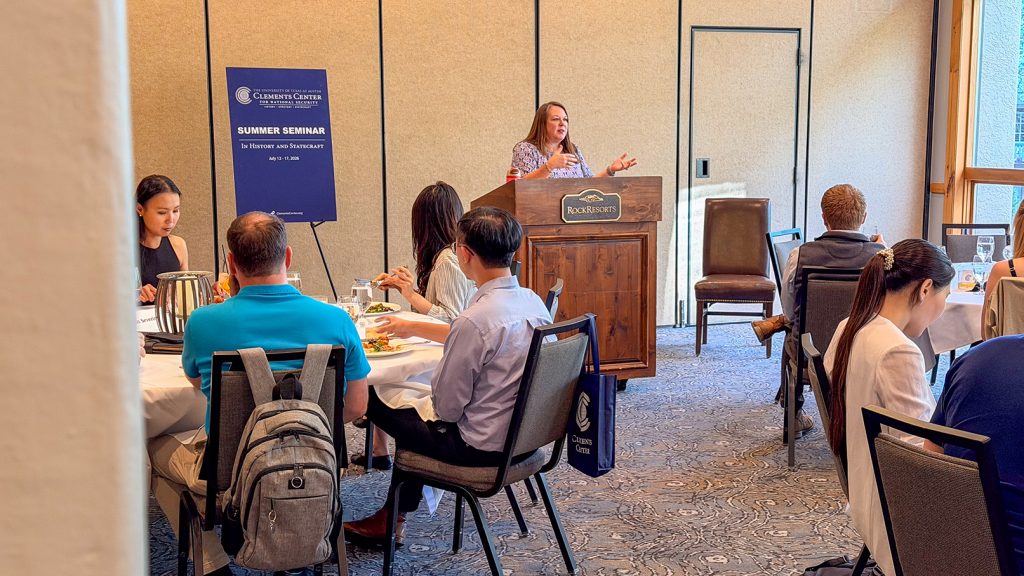
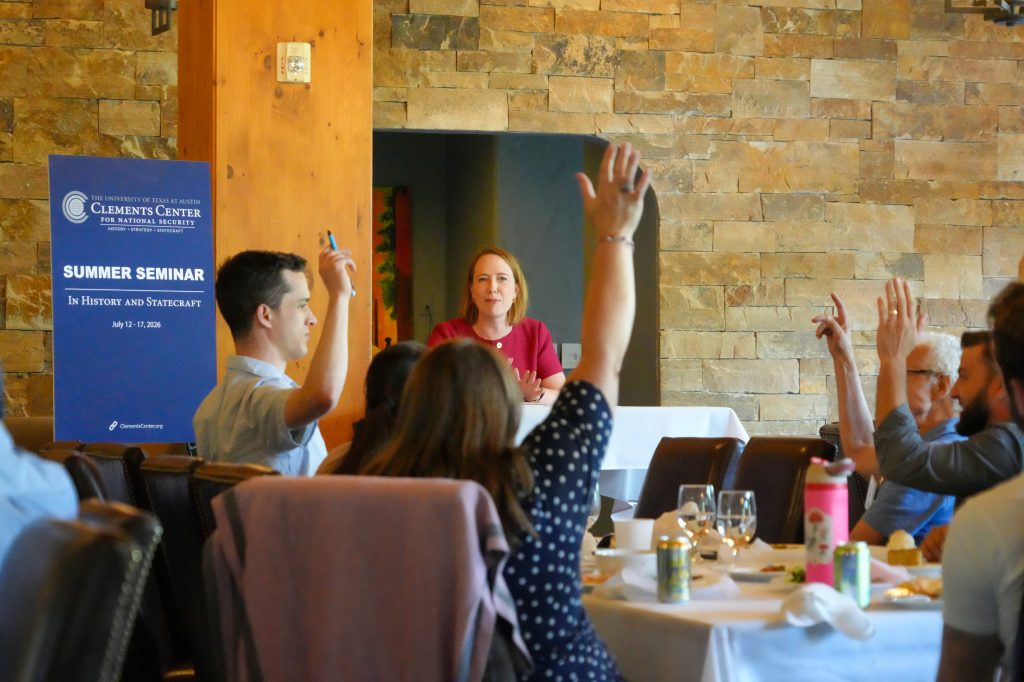
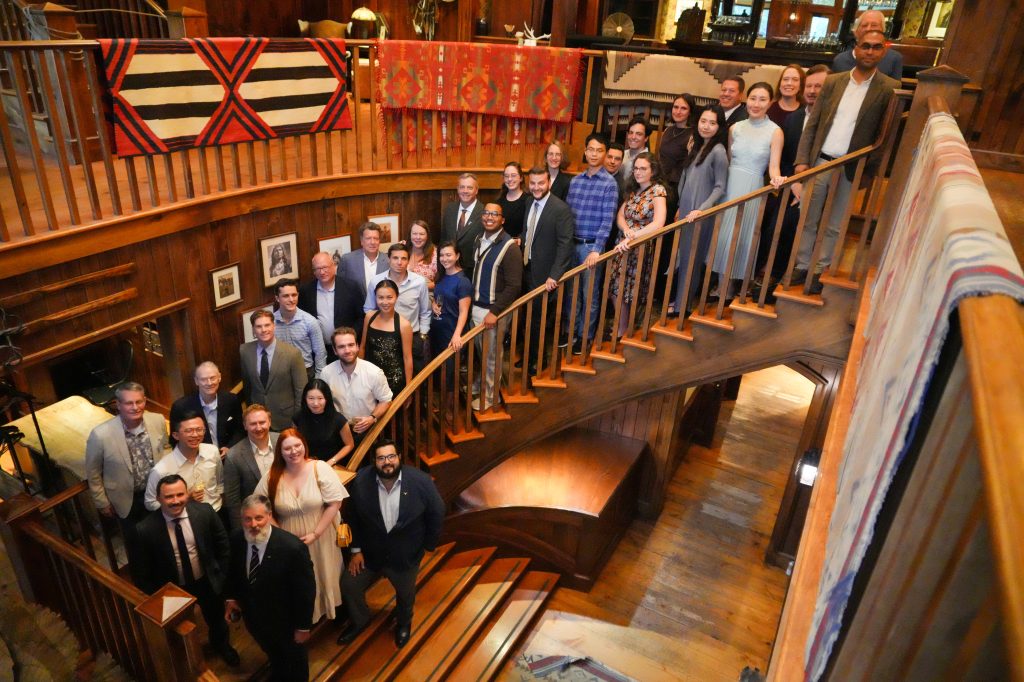
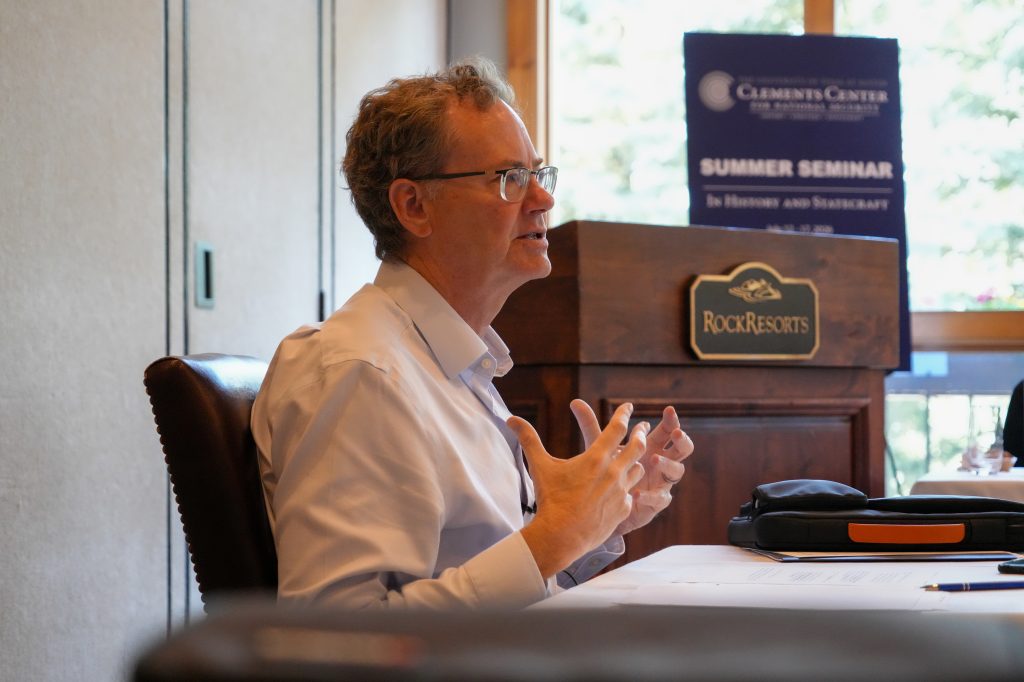
The Clements Center held its 12th annual Summer Seminar in History and Statecraft from July 12 to 17 in Beaver Creek, Colorado, bringing advanced doctoral students together for a week of seminars, discussion, and networking with leading scholars and policymakers.
This year’s highly selective program comprised 21 students from universities in the U.S. and abroad, including Princeton University, Georgetown University, University of Cambridge, Boston University, University of Oxford, Stanford University, and many more.
Over five days, participants examined how historical knowledge informs the practice of statecraft. Frank Gavin* (Johns Hopkins SAIS) opened the seminar’s first session with a talk on thinking historically. Jim Goldgeier (American University, Stanford, and Brookings) led a discussion evaluating NATO enlargement from the end of the Cold War through the Russia-Ukraine war. Tanvi Madan (Brookings Institution) explained why India pursues strategic diversification rather than alliances, and Himamauli Das (K2 Integrity) traced the changing landscape of economic statecraft.
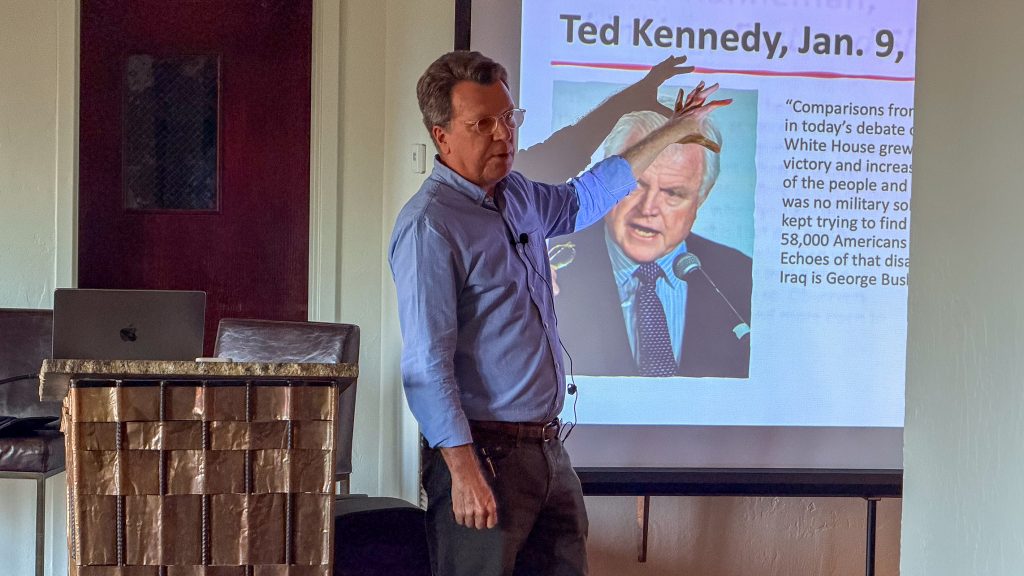
Sessions later in the week turned to the uses and misuses of history in policymaking. Michael Kimmage (Catholic University and the Kennan Institute) drew Cold War lessons for U.S. policy toward Russia and Ukraine. Jadwiga Biskupska (U.S. Army War College and Sam Houston State University) examined military occupation and political change during World War II, and Mark Atwood Lawrence (The University of Texas at Austin), the Clements Center’s Director of Graduate Programs, asked what became of the Vietnam analogy in American foreign policy debates. Mel Leffler (The University of Virginia) compared today’s competition with China to the Cold War with the Soviet Union, and Steve Slick (The University of Texas at Austin) discussed the relationship between intelligence, history, and statecraft.
The program also gave students a view into careers that connect scholarship and policy. Ryan Vest (Texas National Security Review), together with Frank Gavin and Tanvi Madan, offered guidance on navigating academic publishing and public engagement. Elizabeth Charles (Office of the Historian, U.S. Department of State) described the making of the Foreign Relations of the United States series. Meg Reiss (SolidIntel Inc.), formerly national security advisor to Senator Mitt Romney, reflected on how scholarship shaped her work advising on foreign policy, and Ambassador Dennis Ross (The Washington Institute for Near East Policy) shared lessons on statecraft drawn from his service across five presidential administrations. Dirk Ringgenberg (U.S. Army Command and General Staff College) and Mike Kershaw (Colonel, Ret., U.S. Army) brought the discussion to the battlefield with a session on history in military operations. Emily Whalen (Center for Strategic and International Studies and King’s College London) and Elizabeth Charles closed the seminar sessions with a discussion of policy careers beyond the Beltway.
Beyond the formal sessions, students received personalized feedback during a CV review with guest speakers, networked over shared meals, and enjoyed free afternoons in Beaver Creek. Clements Center Executive Director Paul Edgar opened the week and guided participants throughout the program.
Learn more about the Summer Seminar in History and Statecraft.
*See speaker full titles and affiliations below
Speaker Credentials
Jadwiga Biskupska — Harold K. Johnson Visiting Chair in Military History, United States Army War College; Associate Professor of History, Sam Houston State University
Session: “Military Occupation & Political Change: Lessons from World War II”
Elizabeth Charles — Historian, Office of the Historian, U.S. Department of State
Sessions: “History at Foggy Bottom: Making the Foreign Relations of the United States
Series” and “Beyond the Beltway”
Himamauli Das — Senior Managing Director and Counsel, K2 Integrity
Session: “From Essential Security to Economic Security: The Changing Landscape of Economic Statecraft”
Frank Gavin — Giovanni Agnelli Distinguished Professor and Director, Henry A. Kissinger Center for Global Affairs, Johns Hopkins SAIS
Sessions: “Thinking Historically” and “Navigating Academic Publishing and Public Engagement”
Jim Goldgeier — Professor of International Relations, School of International Service, American University; Research Affiliate, Center for International Security and Cooperation, Stanford University; Visiting Fellow, Brookings Institution
Session: “Evaluating NATO Enlargement: From Cold War Victory to the Russia-Ukraine War”
Mike Kershaw — Colonel (Ret.), U.S. Army; Infantry Task Force Coach, Leader Training Program, U.S. Army Joint Readiness Training Center
Session: “History on the Battlefield”
Michael Kimmage — Professor of History, Catholic University; Director, Kennan Institute
Session: “U.S. Policy toward Russia and Ukraine: Lessons from the Cold War”
Mark Atwood Lawrence — Walter Prescott Webb Chair in History, The University of Texas at Austin; Director of Graduate Programs, Clements Center for National Security
Session: “What Ever Happened to the Vietnam Analogy? The Uses of History in Policymaking”
Mel Leffler — Edward Stettinius Emeritus Professor of American History, The University of Virginia
Session: “Grappling with China: Lessons from the Cold War with the USSR”
Tanvi Madan — Senior Fellow, Center for Asia Policy Studies, Brookings Institution’s Foreign Policy Program
Sessions: “Strategies of Diversification, or Why India Doesn’t Do Alliances” and “Navigating Academic Publishing and Public Engagement”
Meg Reiss — Founder and CEO, SolidIntel Inc.; Former National Security Advisor, Senator Mitt Romney
Session: “How Scholarship Helped Me Advise on Foreign Policy”
Dirk Ringgenberg — Clements Center Associate Director and Senior National Security Fellow for Instruction
Session: “History on the Battlefield”
Ambassador Dennis Ross — William Davidson Distinguished Fellow, The Washington Institute for Near East Policy
Session: “Lessons on Statecraft from Five Presidential Administrations”
Steve Slick — Professor of Public Policy Practice, The University of Texas at Austin
Session: “Intelligence, History and Statecraft”
Ryan Vest — Executive Editor, Texas National Security Review, The University of Texas at Austin
Session: “Navigating Academic Publishing and Public Engagement”
Emily Whalen — Senior Associate (Non-resident), Center for Strategic and International Studies; Visiting Scholar, Perry World House, University of Pennsylvania; King’s College London
Session: “Beyond the Beltway”